










Prior to the 13th general elections, it was already anticipated that the government would increase fuel prices after the elections, after so many generous handouts. Indeed,the government must try to get compensated for what it has offered freely.
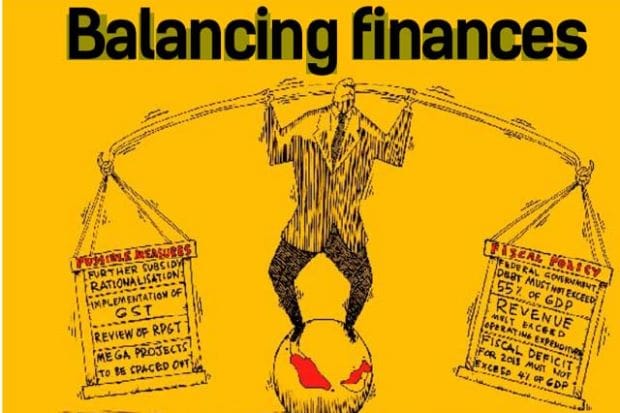
By increasing fuel prices by 20 sen per litre, the government can look forward to RM1.1bn less subsidy this year, RM3.3bn for next year. But will that savings fix our fiscal accounts? The thing is: savings from here might be offset by increased expenses elsewhere. In the end, the budgetary deficit could only get wider.
I’m not trying to alarm anyone here. Government subsidies have been on the rise over the past one decade. So have other expenditures. Subsidies only took up 3.6% of government expenses in 2003, widened significantly to 8.5% and 21.4% respectively in 2007 and 2012. This year, government subsidies make up RM37.6bn or 18.6% of the federal budget.
The RM3.3bn saved from fuel subsidies is not even enough to settle the increased BR1M and other additional aids, including the recently announced RM4.2bn allocation to help bumiputra companies participate in four mega projects and the policy to empower the economic participation of bumiputras to be unveiled on Saturday.
This is not the first time the government has tried to increase fuel prices to cut exorbitant subsidies. Even after former prime minister Tun Abdullah announced to sharply increase petrol prices by 78 sen per litre to RM2.70 and diesel by a whopping RM1 to RM2.58, fiscal deficits continued to run high, because the government had failed to check escalating expenses elsewhere.
After Najib recently announced to increase fuel prices by 20 sen per litre, there have been calls within the government to observe austerity drive. Chief secretary to the government Datuk Dr Ali Hamsa has said all government departments have been instructed to adopt the austerity measures.
And it is not the first time we have heard of this, too. In June 2008, the government announced that a series of austerity measures would be introduced starting from the following month, including slashing the entertainment allowances of Cabinet members by 10% and ministers’ oversea travels confined to Southeast Asian countries only, cutting unnecessary oversea trips and freezing of acquisition of non-essential items, among others.
May 2011, with government subsidies now surpassing the RM21bn mark, the government called for various departments to cut expenses, including reduced allocations.
But what effects have the two major austerity drives brought? And I am not too sure whether the latest austerity drive will work at all.
To tackle the global downturn, Singapore government has before resorted to cutting the salaries of prime minister and Cabinet ministers. But over here, our ministers only enjoy increased salaries.
On May 21 this year, the Sarawak state assembly approved a 300% hike of the salaries of the chief minister, deputy chief minister, state ministers, their deputies and state assemblymen. CM Taib Mahmud’s monthly salary has been increased from RM13,000 to RM39,000, higher than the RM22,800 paid to the prime minister each month.
Melaka’s new chief minister also announced after GE13 that BN state assemblymen not appointed as executive councillors would also be entitled to increased salaries.
The little cut over here may not be enough to compensate the exorbitant expenses elsewhere, especially the generous increments offered to civil servants in the country.
The government’s operational expenditure (including civil servants’ salaries) have been rising every year, averaging 10.5% per annum from 2004 to 2007. The government’s operational expenditure reached RM152.1bn in 2011, and is expected to top RM201.9bn this year.
Consequently, cutting down fuel subsidies will not actually help to balance the country’s account book. We still need to tackle the deficits somewhere else, including reducing remunerations, wastage and irregularities and finding ways to boost revenue – www.mysinchew.com