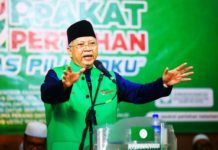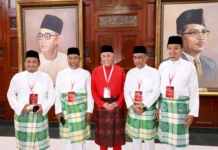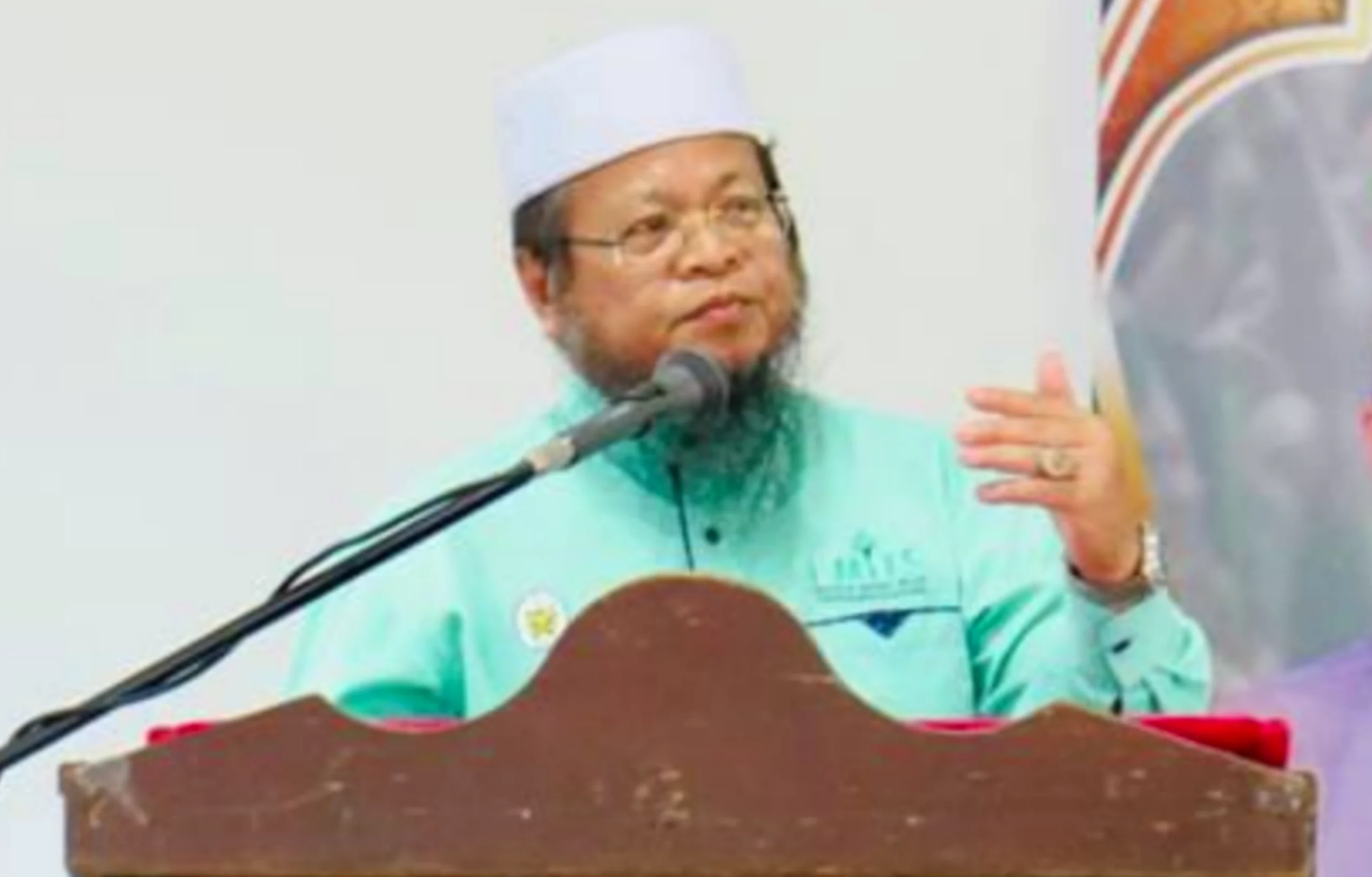





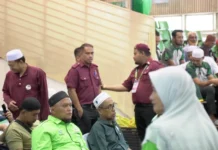


There is talk of a solution to the Terengganu political crisis after Hari Raya but few see the warring factions meeting halfway because they have burnt their bridges.
EXPECTATIONS are high that “something” will happen in Terengganu after Hari Raya.
And there is no shortage of possible scenarios especially on the Internet. Among the more sensational is that Mentri Besar Ahmad Said will be moving on to something else to pave the way for changes in the state.
It seems like wishful thinking on the part of those eager to see him vacate the Mentri Besar’s chair.
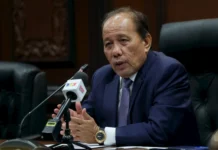
But the indications are that he is staying put especially after Deputy Prime Minister Tan Sri Muhyiddin Yassin shot down the idea that Ahmad would be made a senator.
The senatorship scenario has to do with the fact that the senate seat previously held by Kuala Terengganu chief Datuk Wan Farid Wan Salleh may go to Ahmad, thereby allowing him a graceful way out of the political conundrum.
“All these stories are very unfair to Datuk Ahmad. We are confident he will remain the MB,” said one of his aides.
Poor image
Ahmad has not had an easy time since the day he took over from Datuk Seri Idris Jusoh. He was perceived as some sort of usurper and his ongoing tug-of-war with assemblymen in his own party has not helped.
The experience has made him rather defensive and suspicious of people around him.
He is also quite fed-up with the way he is portrayed in the media –lacking in dynamism, unpolished and struggling to keep up compared to his polished predecessor who was a technocrat, spoke good English and was always ahead of the pack.
Ahmad means to remain in office for as long as he can. He has complained about being made the laughing stock of Terengganu and he is striking back at what he sees as attempts at undermining him.
Recently, he demanded that a Malay daily apologise for a report that some of his assemblymen boycotted a function during Muhyiddin’s visit to the state.
“He asked why they are doing this to him. He was annoyed that they chose to report about five assemblymen who did not come when thousands of other people came,” said the aide.
It is no secret that Ahmad was not Umno’s choice for Mentri Besar. However, the palace’s say over the choice of Mentri Besar has been one of those unspoken conventions of state-level politics, and there is little that any party in power can do about it.
He fell out with palace officials for a while but is now back in their good graces and is making the most of it.
He is accusing the other side of not giving him the respect due to a Mentri Besar while the other side claims he is trying to erode their infuence and role as assemblymen.
The infighting shows little sign of abating but, at least, the assemblymen’s threat of crossing over to PKR has evaporated.
Ahmad’s faction enjoys the support of all but two of the eight Umno division chiefs.
However, the faction against him comprises at least 15 of the 23 Barisan Nasional assemblymen and is widely seen as being led by Ajil assemblyman Datuk Rosol Wahid.
In that sense, Ahmad has strong support in the party but a rather loose control of the 32-seat State Legislative Assembly.
The anti-Ahmad faction recently staged a silent protest at the assembly session. They sat through the two-day session without uttering a word. They supported the government motion and enactments but their silence was a glaring rejection of his leadership.
“It was quite an abnormal experience for me because the silent group included some of our best debaters,” said one state exco member.
Several months ago this group boycotted the assembly session and only returned to the assembly when ordered by the Prime Minister.
That is how rotten things have grown between the two camps. Their feud is the subject of discussion in the warung and coffeeshops.
Any solution would have to involve both groups meeting halfway.
But as one assemblyman pointed out: “How to meet halfway? They have burnt their bridges. It is harder than brokering peace in the Middle East.”
There were high hopes when Umno vice-president Datuk Seri Hishammuddin Tun Hussein took over from Ahmad as the state Umno chief. Ahmad is now the only Mentri Besar in the peninsula who is not the state party boss.
But things went rapidly downhill after Hishammuddin appointed a number of division chiefs, who are also allies of Ahmad, to the state liaison committee. For instance, Datuk Tengku Putera Tengku Awang, a powerful warlord from Hulu Terengganu and an Ahmad ally, was put in the influential post of Umno secretary.
By then, relations between these division chiefs and the anti-Ahmad assemblymen had hit rock bottom over the selection of local grassroots leaders like the JKKK. The dissident assemblymen were sore because the power to appoint these grassroots leaders had been taken away from them and put in the hands of the division chiefs.
The anti-Ahmad group naturally saw Hishammuddin as skewed towards Ahmad’s interests whereas Hishammuddin’s intention was to strengthen the party machinery.
Damage control
Some said Hishammuddin may have under-estimated the deep-seated extent of the rift and is now struggling to tame the cross currents.
Another unhappy assemblyman said: “He told us we are either with him or not with him but this problem is not about him, it’s about Terengganu and us. He likes to remind people of his father and grandfather. We don’t care about his family background, we just want him to solve the problem.”
But, said Air Putih aassemblyman Wan Hakim Wan Mokhtar who was part of the silent protest earlier this month: “I believe he (Hishammuddin) is trying to work things out away from the media glare. He has asked us to continue serving our constituencies and to try to put aside our differences for now.”
Hishammuddin has told some of them that there will be some action after Hari Raya but no one knows what he meant by that.
He has also tried to put in his personal touch by inviting them either individually or in small groups to his Kuala Lumpur residence to pitch his ideas and win their cooperation.
“Give Hishammuddin a chance to settle the issues. People should not let personal feelings affect their performance as wakil rakyat. Previously it was Idris’ time, now it is Ahmad’s time and if they perform, their chance will come,” said Tengku Putera, who despite his warlord reputation has a soft-spoken and persuasive style.
The perception among national Umno leaders is that the warfare is only at the level of politicians holding posts and that it is a conflict of personalities rather than a dispute over issues. They think it does not really affect the ordinary person on the ground.
“It does not take a doctorate to realise that people are not going to vote for a party whose leaders are quarrelling like mad. People are tired of the fighting and uninspiring leadership. This is a state where the opposition is ready to step in.
“To remove Ahmad would not be good but to not remove him would be bad. The leadership has to make a decision with the state in mind,” said a division chief.
The Barisan is fortunate here because PAS leaders including Terengganu strongman Datuk Mustafa Ali have stated clearly that they are uninterested in forming a government via the back door.
“We want to win fair and square,” said Mustafa.
But the most damaging impact of the infighting is that there has been negligible progress in the state.
“We were ahead of other states under Datuk Seri Idris. Now other states are busier than us,” said the above exco member.
Idris had his detractors and stepped on some very important toes but he brought in changes especially in Kuala Terengganu. People could see things moving within six months of his taking charge.
Lack of growth
Ahmad’s position would be strengthened if he could bring growth to the state and provide jobs for the people. But he has not done well in this aspect and that is why he remains vulnerable to attacks.
Moreover, the civil servants who are seen as the swing group that caused the Barisan to topple in 1999 are watching and assessing him. They could either help the Barisan to survive or cause it to fall.
Muhyiddin’s presence in Terengganu last week was not to intervene but to signal that the national Umno leadership is very concerned and wants a speedy conclusion to the crisis.
Hishammuddin’s standing as an arbitrator and problem solver is also at stake and he has to come up with something that is acceptable to both sides soon. Or rather, he should really try to make “something” happen after Hari Raya
Origin by JOCELINE TAN with Tittle ; No sign of burying the hatchet